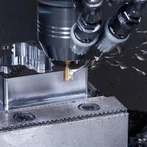
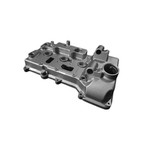
Five-axis precision lathe machining combines the rotational efficiency of a CNC lathe with additional cutting movements for producing components that contain cylindrical, angled, milled, drilled, or contoured features.
At SHD, this manufacturing method is often considered when a part cannot be completed efficiently through conventional turning alone. It allows several operations to be combined within one coordinated machining process, helping reduce repeated positioning and unnecessary transfers between different machines.
How Five-Axis Precision Lathe Machining Expands Turning Capability
A standard CNC lathe is highly effective for round components such as shafts, pins, bushings, sleeves, and threaded fittings. The workpiece rotates while a stationary cutting tool removes material from its outer or inner surfaces.
However, many modern components are not completely symmetrical. They may include off-center holes, side slots, angled surfaces, flats, cross-drilled features, or small pockets. These features normally require a separate milling operation after turning.

A five-axis machine expands the available movement so the cutting tool can approach the workpiece from more directions. In suitable projects, mill-turn machining allows turning and milling operations to be completed without repeatedly removing the component from its original fixture.
Fewer Setups Support Better Feature Alignment
Every time a workpiece is removed and repositioned, a new reference must be established. Even when operators use accurate fixtures, small positioning differences may affect the relationship between turned and milled features.
Keeping the part in one controlled setup can improve concentricity, feature location, and alignment. This is especially useful for complex rotational parts containing precision bores, angled holes, machined flats, or connection features around a cylindrical body.
Reduced setup requirements can also shorten production time. Instead of moving parts between a lathe, milling machine, and drilling station, one planned process may complete most critical features in sequence.
Typical Components and Application Areas
This process is suitable for many small and medium-sized components used in automotive systems, robotics, medical equipment, industrial machinery, optical devices, and precision assemblies.
Common examples include valve bodies, threaded connectors, instrument housings, drive shafts, hydraulic fittings, nozzles, sensor components, and customized mechanical adapters.
At SHD, we may use mill-turn machining for prototypes or low-volume projects where dimensional relationships are important. It is particularly valuable when complex rotational parts must be tested in a real assembly before larger production decisions are made.
The process can support aluminum, stainless steel, brass, titanium, and selected engineering plastics. Material choice depends on mechanical strength, weight, corrosion resistance, machinability, and the final working environment.
Practical Design Considerations
Although advanced machines offer greater flexibility, part design still affects manufacturing efficiency. Very deep internal features, extremely thin walls, inaccessible corners, and unnecessary tight tolerances may increase machining difficulty. Designers should identify the dimensions that directly affect assembly or function instead of applying the same strict tolerance to every surface.
Tool access is another important consideration. A feature may look simple in a 3D model but require a long or narrow cutting tool that is less stable during production. Small changes to hole depth, corner radius, or feature position can sometimes improve the machining plan without changing product performance.
Clear drawings and complete 3D models help our engineers evaluate these details before programming begins.
Conclusion
Five-axis precision lathe machining provides a practical solution for components that combine turned geometry with side features, angled details, or precision milling. By reducing setups and maintaining consistent references, it can improve the production of accurate and integrated components.
Supporting More Efficient CNC Part Development
At SHD, we apply five-axis precision lathe machining to prototypes and low-volume OEM projects that require coordinated turning and milling. Our team reviews material, geometry, tolerance, tool access, and inspection requirements before selecting an appropriate production strategy.