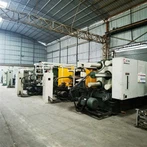
Vacuum casting prototypes provide a practical way to produce small batches of plastic-like parts when a project needs more than a single 3D-printed model but does not yet justify production injection tooling.
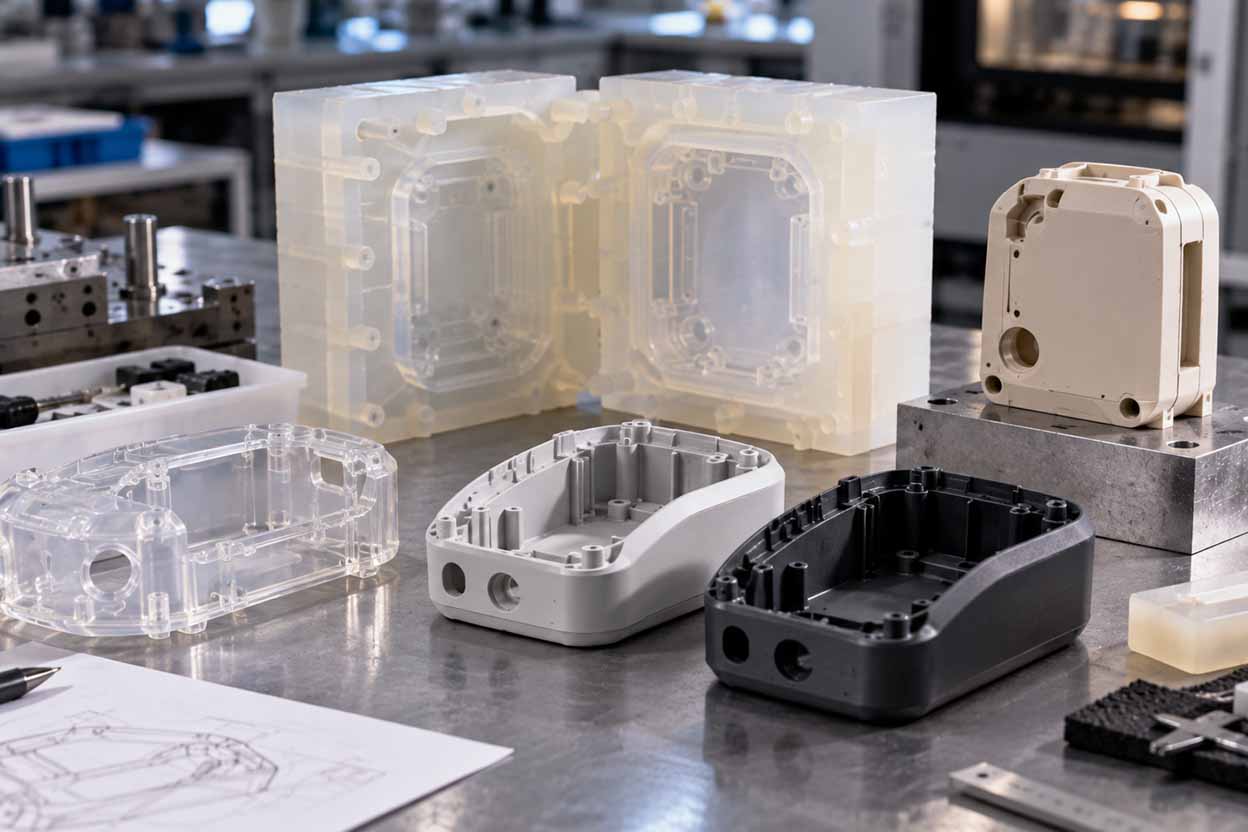
The process usually begins with a master pattern, which is used to create a flexible silicone mold. Liquid casting material is then introduced into the mold under vacuum conditions to reduce trapped air and reproduce the geometry of the original model.
For product development teams, the main value is flexibility. Several similar parts can be produced for assembly checks, appearance review, presentation, or limited functional evaluation without developing a conventional steel injection mold.
How Vacuum Casting Prototypes Support Product Development
Vacuum casting is particularly useful during the stage between early rapid prototyping and full production. A 3D-printed master can be refined before the silicone mold is produced, allowing surface details, edges, holes, and external geometry to be transferred into multiple copies. This makes urethane casting useful when several departments or testing teams need physical samples at the same time. The process can also help evaluate:
- Housing and enclosure geometry
- Assembly between mating components
- Buttons, covers, and structural features
- Surface texture and visual appearance
- Small-batch design variations
- Parts intended for demonstrations or engineering review
However, vacuum-cast components should not automatically be treated as identical to final injection-molded parts. Material behavior, tooling pressure, shrinkage, and production conditions differ between the two processes.
Why Silicone Molds Work Well for Small Batches
Silicone molds are flexible, which allows some complex features and minor undercuts to be reproduced without the same tooling structure required by rigid metal molds. This flexibility makes the process suitable for low-volume plastic parts with detailed external shapes.
The tradeoff is mold life. Silicone molds gradually wear or change after repeated casting cycles, so vacuum casting is generally better suited to development batches than long-term mass production.
Geometry also matters. Thin walls, deep cavities, small details, and difficult air-release areas may still require careful mold design and casting preparation.
Surface Quality Begins with the Master Pattern
The silicone mold reproduces the surface of the original master, including both intended textures and unwanted imperfections. If the master contains visible print layers, scratches, or rough edges, these may appear on the replicated parts. Sanding, polishing, priming, or other preparation may therefore be required before molding. This is one reason vacuum casting should be planned as a complete process rather than viewed only as a copying method.
When Should Buyers Consider Vacuum Casting?
Vacuum casting can be useful when a project requires multiple prototype parts, visual samples, or a limited quantity for design verification. It may also provide a practical bridge before injection molding when the product design is still being adjusted. If the required quantity continues to increase, or the project needs final production materials and long-term repeatability, injection molding or another production method may become more appropriate.
Conclusion
Vacuum casting prototypes provide an efficient route for producing multiple development parts without immediately investing in production tooling. The quality of the result depends on the master pattern, silicone mold design, casting material, geometry, and finishing requirements. Selecting the process according to the purpose of the prototype helps avoid expecting production-level behavior from a development method.
Prototype Manufacturing Support from SHD
SHD supports custom product development based on 3D models, drawings, prototype objectives, appearance requirements, and expected quantities.
For projects considering vacuum casting, early review of geometry, master-pattern preparation, surface requirements, and future production plans can help determine whether vacuum casting, 3D printing, CNC machining, or injection molding provides the more practical development route.
Frequently Asked Questions
Q01: Can vacuum casting reproduce transparent parts?
Some casting materials can provide transparent or translucent appearances, but the final clarity depends on the selected material, mold condition, surface preparation, and finishing process.
Q02: Can threaded features be made through vacuum casting?
Some thread-like geometry may be reproduced, but functional threaded areas may require inserts or secondary machining depending on the design and loading requirements.
Q03: When should a project move from vacuum casting to injection molding?
The decision usually depends on quantity, material requirements, repeatability, part performance, and tooling economics rather than one fixed production number.