Wire EDM machining is a non-contact manufacturing process that uses controlled electrical discharges between a continuously moving wire electrode and a conductive workpiece to remove material. Unlike conventional milling, it does not rely on a rotating cutting tool to physically cut the metal.
This makes wire EDM particularly useful for hardened steel, narrow slots, intricate profiles, and precision tooling features that may be difficult to produce with conventional cutting tools. In mold manufacturing, its value comes from combining geometric accuracy with minimal mechanical cutting force.
Where Wire EDM Machining Adds Value in Mold Manufacturing
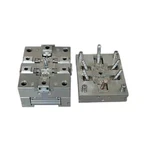
Injection molds, stamping dies, and precision tooling often contain small internal corners, narrow openings, and closely fitted components. Traditional CNC milling can produce many of these features efficiently, but cutter diameter and tool accessibility create geometric limitations.
Wire EDM machining uses a thin electrode wire to follow a programmed cutting path. Because the wire does not physically contact the workpiece, machining forces are minimal. This makes it suitable for precision mold inserts, punches, die openings, and delicate metal profiles.
Hardened Steel Can Be Machined After Heat Treatment
One practical advantage of wire EDM is its ability to machine electrically conductive materials regardless of their hardness.
Hardened tool steel can be difficult to machine using conventional cutting tools because higher cutting forces and tool wear may affect efficiency.
Wire EDM removes material through electrical discharge rather than mechanical cutting. For suitable mold components, this allows critical contours to be finished after heat treatment, helping manufacturers control final geometry without relying entirely on machining before hardening.

Surface Quality Depends on Cutting Strategy
Wire EDM commonly uses a rough cutting pass followed by additional finishing passes when higher accuracy or better surface quality is required. The initial cut removes most of the material, while subsequent skim cuts use adjusted discharge conditions to refine the profile and reduce the thermally affected surface layer.
The required EDM surface finish depends on the component's function. A mold insert requiring close fitting or a refined working edge may need a different finishing strategy from a simple clearance opening.
Additional passes improve surface quality but also increase machining time.
Wire EDM and CNC Milling Work Together
Wire EDM does not replace conventional CNC milling. Milling is generally more efficient for removing larger material volumes, producing flat surfaces, and machining accessible pockets.
Wire EDM is more appropriate for selected through-cut profiles, narrow slots, and geometries restricted by cutter access. Internal closed contours typically require a prepared starting hole through which the wire can be threaded.
Combining both methods allows manufacturers to select the most suitable process for each feature.
Conclusion
Wire EDM machining provides a practical solution for precision mold components requiring complex contours, limited cutting forces, and accurate profiles in conductive materials. Its effectiveness depends on part geometry, wire selection, cutting strategy, surface requirements, and the relationship with other machining operations.
Choosing wire EDM for appropriate features can simplify difficult tooling tasks without unnecessarily increasing the complexity of the entire manufacturing process.
Precision Manufacturing Support from SHD
SHD supports custom manufacturing projects based on customer drawings, 3D models, material specifications, critical dimensions, and functional requirements. For precision tooling and complex metal components, early review of machining access, material condition, geometric features, and finishing expectations can help identify an appropriate manufacturing route.
Wire EDM machining is a non-contact manufacturing process that uses controlled electrical discharges between a continuously moving wire electrode and a conductive workpiece to remove material. Unlike conventional milling, it does not rely on a rotating cutting tool to physically cut the metal.
This makes wire EDM particularly useful for hardened steel, narrow slots, intricate profiles, and precision tooling features that may be difficult to produce with conventional cutting tools. In mold manufacturing, its value comes from combining geometric accuracy with minimal mechanical cutting force.
Where Wire EDM Machining Adds Value in Mold Manufacturing
Injection molds, stamping dies, and precision tooling often contain small internal corners, narrow openings, and closely fitted components. Traditional CNC milling can produce many of these features efficiently, but cutter diameter and tool accessibility create geometric limitations.
Wire EDM machining uses a thin electrode wire to follow a programmed cutting path. Because the wire does not physically contact the workpiece, machining forces are minimal. This makes it suitable for precision mold inserts, punches, die openings, and delicate metal profiles.
Hardened Steel Can Be Machined After Heat Treatment
One practical advantage of wire EDM is its ability to machine electrically conductive materials regardless of their hardness.
Hardened tool steel can be difficult to machine using conventional cutting tools because higher cutting forces and tool wear may affect efficiency.
Wire EDM removes material through electrical discharge rather than mechanical cutting. For suitable mold components, this allows critical contours to be finished after heat treatment, helping manufacturers control final geometry without relying entirely on machining before hardening.
Surface Quality Depends on Cutting Strategy
Wire EDM commonly uses a rough cutting pass followed by additional finishing passes when higher accuracy or better surface quality is required.
The initial cut removes most of the material, while subsequent skim cuts use adjusted discharge conditions to refine the profile and reduce the thermally affected surface layer.
The required EDM surface finish depends on the component's function. A mold insert requiring close fitting or a refined working edge may need a different finishing strategy from a simple clearance opening.
Additional passes improve surface quality but also increase machining time.
Wire EDM and CNC Milling Work Together
Wire EDM does not replace conventional CNC milling. Milling is generally more efficient for removing larger material volumes, producing flat surfaces, and machining accessible pockets.
Wire EDM is more appropriate for selected through-cut profiles, narrow slots, and geometries restricted by cutter access. Internal closed contours typically require a prepared starting hole through which the wire can be threaded.
Combining both methods allows manufacturers to select the most suitable process for each feature.
Conclusion
Wire EDM machining provides a practical solution for precision mold components requiring complex contours, limited cutting forces, and accurate profiles in conductive materials. Its effectiveness depends on part geometry, wire selection, cutting strategy, surface requirements, and the relationship with other machining operations.
Choosing wire EDM for appropriate features can simplify difficult tooling tasks without unnecessarily increasing the complexity of the entire manufacturing process.
Precision Manufacturing Support from SHD
SHD supports custom manufacturing projects based on customer drawings, 3D models, material specifications, critical dimensions, and functional requirements. For precision tooling and complex metal components, early review of machining access, material condition, geometric features, and finishing expectations can help identify an appropriate manufacturing route.