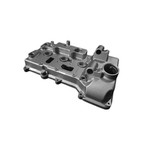
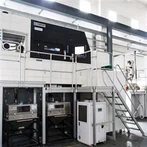
Lightweight 3D printing focuses on reducing the mass of printed components through material selection and structural design. Instead of making every part completely solid, additive manufacturing allows designers to use foaming filaments, hollow sections, lattice structures, and optimized wall thicknesses. These approaches are useful for prototypes, drone components, model aircraft, product housings, and other applications where excessive weight can affect performance or usability. However, lighter does not always mean stronger. The most suitable method depends on how the part will be loaded, handled, and used.

How Lightweight 3D Printing Works
There are two main approaches to reducing weight: lowering material density and reducing the amount of material inside the component. Both methods can be effective, but they solve different problems.
Active Foaming Filaments Reduce Material Density
LW-PLA, or lightweight PLA, contains an active foaming agent that expands when heated during extrusion. For example, colorFabb's LW-PLA begins foaming at approximately 230°C and can expand to nearly three times its original volume under suitable printing conditions. The manufacturer reports potential weight reductions of up to 65% compared with standard PLA prints. To compensate for this expansion, the printer's material flow must be adjusted. The appropriate temperature and flow settings depend on the specific filament.
Foamed PLA typically produces a matte, slightly textured surface suitable for applications such as RC aircraft, lightweight props, and display models.
The tradeoff is mechanical performance. Increasing foaming can reduce material density, but it may also reduce strength and stiffness. Functional parts should therefore be evaluated according to their actual loading requirements.
Lattice Structures Remove Unnecessary Material
Another lightweighting method is structural optimization. Rather than filling a component with solid plastic, designers can use internal lattice structures, cellular patterns, or hollow sections. These geometries reduce material consumption while retaining support in selected areas. Common approaches include:
- Lattice and cellular infill
- Hollow bodies with reinforced walls
- Optimized shell thickness
- Local reinforcement around mounting features
- Topology optimization for defined loading conditions
For example, a prototype housing may require stronger walls around screw bosses but less material across large, lightly loaded panels. This is one advantage of industrial 3D printing: material can be distributed according to the component's geometry and functional requirements rather than simply filling the entire volume.
Reinforced Materials Offer Another Option
Lightweight design is not limited to foaming PLA. Carbon-fiber or glass-fiber-reinforced polymers may provide useful stiffness-to-weight properties for selected engineering applications. Materials such as reinforced nylon and PEKK-based composites are considered when mechanical or thermal requirements exceed those of ordinary PLA. However, reinforced filaments have their own processing limitations, including equipment compatibility, moisture sensitivity, and potentially abrasive fillers.
Material selection should therefore consider both the target weight and the required mechanical performance.
Where Lightweight Printing Makes Sense
Lightweight additive manufacturing is particularly useful when complex geometry and reduced mass provide a practical benefit.
Typical applications include drone housings, model aircraft structures, robotic covers, custom fixtures, ergonomic prototypes, and experimental product designs. The manufacturing method should still match the purpose of the part. A lightweight visual prototype may not require the same structural verification as a load-bearing industrial component.
Conclusion
Lightweight 3D printing combines material science with practical structural design. Active foaming filaments reduce material density, while lattice structures and hollowing reduce unnecessary volume. Reinforced polymers provide another option when the project requires a different balance of weight and mechanical properties. The best approach is not simply to minimize material, but to preserve the performance needed for the component's intended use.
Lightweight Prototype Development with SHD
SHD supports custom prototype development based on customer 3D models, material requirements, geometry, and functional expectations. For lightweight components, early review of wall thickness, internal structures, material selection, and finishing requirements can help identify practical opportunities for weight reduction without overlooking manufacturability.